SYNOPSIS
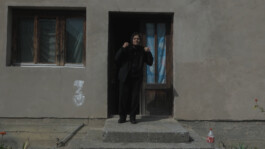
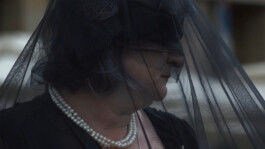
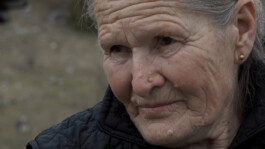
Dosta Dosta shows the courage of three generations of women in the Balkans who claim public space with their bodies, refusing to remain subordinate to the patriarchal system. They step out to mourn, perform and protest. The film follows mourning women, political activists from Women in Black and dancers in Serbia and Montenegro, uniting their stories. The film displays the political, performative and feminist power of public mourning and protest.
ABOUT
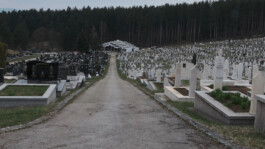
The film explores the rare and ancient practice of public mourning, a communal tradition that merges singing and crying. This ritual, deeply rooted in various cultures since antiquity, is still observed today, especially in Europe’s Balkan region, primarily by women. It invites reflection on the kinds of communities that form through shared grief and public mourning. In this context, the body takes on a political dimension, as Judith Butler suggests.
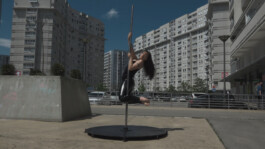
One example is the "Women in Black," a global feminist, anti-militarist, and anti-fascist organization that has been protesting against war, violence, and fascism since the 1990s in the Balkans, often drawing upon traditional mourning strategies in their activism. Ljubica Duvnjak Đorđevski, an anthropologist, dancer, and choreographer who is also a member of the "Women in Black," views the body as a powerful tool of feminist protest. To strengthen her connection to this tool, she practices pole dancing. Dosta Dosta introduces us to mourning women, their songs of grief and pain, and the movements and stories that embody mourning practices, political protest, and female empowerment in the Balkans.
FESTIVALS 2026
SPE Media Festival, Atlanta, USA - Award for Best Documentary Film 2026
Écrans Mixtes Festival, Lyon, France
FESTIVALS 2025
Women X Film Festival, Darlington, UK - Award for Best Documentary Film 2025
Women Make Waves International Film Festival, Taipei, Taiwan
Female Eye Film Festival, Toronto, Canada
Activists without Boarders, London, United Kingdom - Honorary Award for Efforts in Social Filmmaking
this human world, Vienna, Austria
Rojava International Film Festival, Qamishli, Rojava
SHORT to the Point, Bucharest, Romania - Monthly Nominee
DOKUBAZZAR Independent Documentary Film Festival, Ljubliana, Slovenia
Credits
Directing, Production& Camera Operator: Julia Novacek
Protagonists: Nata Ćosović, Ljubica Duvnjak Đorđevski, Violeta Đikanović, Rada Joksović, Milena Potpara, Sabina Talović
Editing& Dramaturgy: Sarah-Christin Peter
Research: Julia Novacek, Nataša Mikić, Ljubica Duvnjak Đorđevski, Dalibor Mikić
Production Management& Interpreting: Nataša Mikić
Interviewing, Choreography& Dance: Ljubica Duvnjak Đorđevski
Sound Recording: Teresa Schwind, Alexandra Mitrović
Sound Design: Flora Rajakowitsch
Music Composition: Tamara Ristić Kezz
Color Grading: Milica Drakulić
Re-Recording Mixing: Victoria Grohs
Additional Interviewing: Itana Ćupić
Additional Camera Operating: Bojan Kovačević
Graphics: Valerie Tiefenbacher
Translation & Subtitles: Dalibor Mikić
Translation & Proofreading: Jelena Anđelković
Support Finances: Sophie Menzinger
Funded by: City of Vienna, BMKOES Austria, Fonds Darstellende Künste Berlin, GVL Germany, Austrian Cultural Forum Belgrade